
What we do
What we do
At DONYA tech, our mission is to give expecting mothers and families the tools to feel informed, connected and empowered during pregnancy. By turning small movements into meaningful insights, we help transform uncertainty into trust.
At Donya Tech, our mission is to give expecting mothers and families the tools to feel informed, connected and empowered during pregnancy. By turning small movements into meaningful insights, we help transform uncertainty into trust.


What we want to accomplish
What we want to accomplish
We aim to create a world where every mother feels safe, heard and supported. With our technology, we want to provide insights through real data, strengthen family bonds by sharing experiences, and build lasting trust between health, technology, and people.
We aim to create a world where every mother feels safe, heard and supported. With our technology, we want to provide insights through real data, strengthen family bonds by sharing experiences, and build lasting trust between health, technology, and people.

Data on fetal movements is limited.
But here is what we know.
Data on fetal movements is limited.
But here is what we know.
Data on fetal movements is limited.
But here is what we know.
92%
92%
Daily Awareness
Our latest survey shows that 92% of pregnant women think about their baby’s movements every day - often several times a day.
Our latest survey shows that 92% of pregnant women think about their baby’s movements every day - often several times a day.
Our latest survey shows that 92% of pregnant women think about their baby’s movements every day - often several times a day.
79%
79%
Anxiety Prevalence
79% reported experiencing pregnancy-related anxiety linked to concerns about reduced fetal movements (RFM), underscoring a clear and widespread need for better support in this area.
79% reported experiencing pregnancy-related anxiety linked to concerns about reduced fetal movements (RFM), underscoring a clear and widespread need for better support in this area.
79% reported experiencing pregnancy-related anxiety linked to concerns about reduced fetal movements (RFM), underscoring a clear and widespread need for better support in this area.
76%
76%
Tracking Demand
When asked what would most help them feel calm about their baby’s movements, 76% of respondents said they want a simple, reliable way to track fetal activity.
When asked what would most help them feel calm about their baby’s movements, 76% of respondents said they want a simple, reliable way to track fetal activity.
89%
89%
Strong Relevance
After learning about DONYA, 89% of respondents stated it would be relevant to them, confirming there is a demand for reliable, evidence-based information and practical tools.
After learning about DONYA, 89% of respondents stated it would be relevant to them, confirming there is a demand for reliable, evidence-based information and practical tools.
76%
Tracking Demand
When asked what would most help them feel calm about their baby’s movements, 76% of respondents said they want a simple, reliable way to track fetal activity.
89%
Strong Relevance
After learning about DONYA, 89% of respondents stated it would be relevant to them, confirming there is a demand for reliable, evidence-based information and practical tools.

The product
The product
DONYA tech is developing a wearable pregnancy band with safe sensors that tracks your baby’s movements from week 25 and beyond. Connected to an easy-to-use app, it offers objective, personalised movement data that complements your intuition, helping you follow your baby’s wellbeing day by day.
DONYA Tech is developing a wearable pregnancy band with safe sensors that tracks your baby’s movements from week 25 and beyond. Connected to an easy-to-use app, it offers objective, personalised movement data that complements your intuition, helping you follow your baby’s wellbeing day by day.
Donya Tech is developing a wearable pregnancy band with safe sensors that tracks your baby’s movements from week 25 and beyond. Connected to an easy-to-use app, it offers objective, personalised movement data that complements your intuition, helping you follow your baby’s wellbeing day by day.
COMING 2027
COMING 2027

Join the waitlist
Join the waitlist
Join the waitlist
Want to learn more about DONYA tech and our upcoming beta test in Sweden? Sign up to stay updated and we will contact you with the latest status.
Want to learn more about DONYA tech and our upcoming beta test in Sweden? Sign up to stay updated and we will contact you with the latest status.

The journey of DONYA tech
The journey began in September 2024 and since then we have been nominated for Rapidus’ “34:orna” and Dagens Industri’s “Female Founders 2026,” as well as awarded “Rising Star 2026” by WiB Capital.
We are currently developing our third prototype, which will enter large-scale user testing in autumn 2026. DONYA will launch in 2027 through our own e-commerce platform, offering the product directly to consumers.


The journey of DONYA tech
The journey began in September 2024 and since then we have been nominated for Rapidus’ “34:orna” and Dagens Industri’s “Female Founders 2026,” as well as awarded “Rising Star 2026” by WiB Capital.
We are currently developing our third prototype, which will enter large-scale user testing in autumn 2026. DONYA will launch in 2027 through our own e-commerce platform, offering the product directly to consumers.
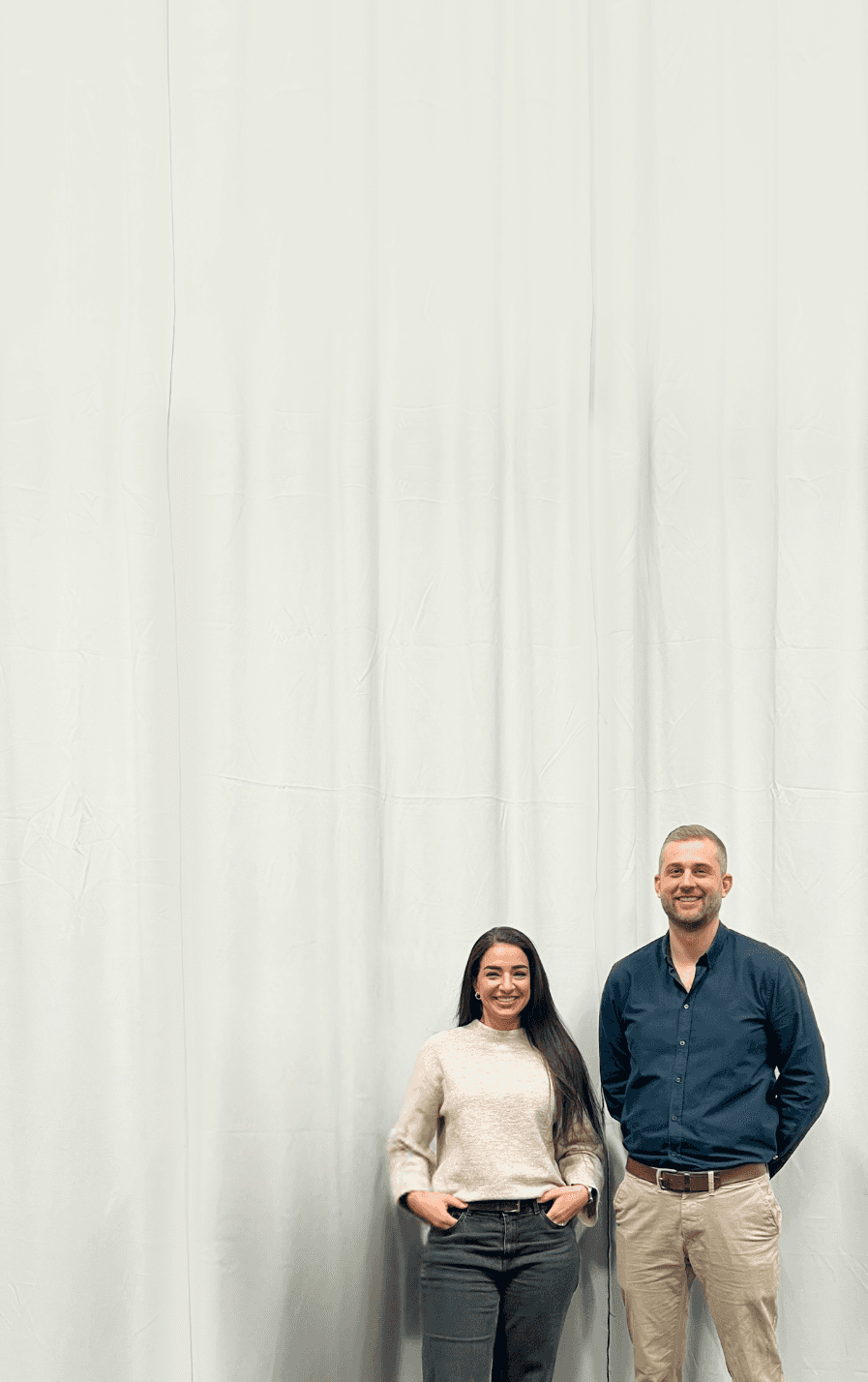
The journey of DONYA tech
The journey began in September 2024 and since then we have been nominated for Rapidus’ “34:orna” and Dagens Industri’s “Female Founders 2026,” as well as awarded “Rising Star 2026” by WiB Capital.
We are currently developing our third prototype, which will enter large-scale user testing in autumn 2026. DONYA will launch in 2027 through our own e-commerce platform, offering the product directly to consumers.


They say that all great business ventures start with a problem you encounter and cannot find a solution for. For me, that moment came when I was pregnant with my daughter in 2023.
I have always been active from competing in figure skating to lifting weights and playing tennis and tracking my health with wearables has become second nature.
So, you can imagine how strange it felt to be told to pay attention to my baby’s movements and write them down on a piece of paper. I could track so much about my own body but when it came to her movements, I was left with pen, paper and my own interpretation.
That contrast stayed with me. And that is how the seed of DONYA was planted.
Life before DONYA
Before dedicating myself fully to DONYA, I worked as an in-house lawyer for Nordic, UK
and American companies. I enjoyed seeing different departments come together to move one vision forward by supporting, guiding and challenging them along the way. Sometimes you find yourself in the crossfire and that is where a company’s resilience is truly tested.
Those experiences now shape how I lead DONYA as its founder and CEO.

I'm a car guy. From a young age I tinkered with anything with wheels and an engine, trying to make it go faster. That gave me a practical, hands-on understanding of technology. My dream of working in Formula 1 then led me to study mechanical engineering, where I learned the theory behind it.
So, how did a car guy end up developing smart maternal wearables? Well, making a car go quick and checking fetal movements actually aren't that different.
In the early days of racing, there were no sensors and thus no data. So to improve the performance of the car, the engineers had to listen to the feedback of the driver, a human. As technology progressed, sensors became essential to understanding how to improve the car via data. The sensors can never replace the driver, but they can strongly enhance their judgement.
In a sense, this is what we are trying to do with DONYA: strengthen mothers in their perceptions of fetal movement with modern technology.
Life before DONYA
Before DONYA, I developed road and race cars at the highest level for companies like Volvo Cars, Koenigsegg and Red Bull Racing F1. This mainly meant sitting in front of the computer, running simulations of how to design the car in the best way.
But it also meant translating human feedback into technical terms, so that the product could be improved. That understanding of the interplay between man and machine is what I bring to DONYA.
They say that all great business ventures start with a problem you encounter and cannot find a solution for. For me, that moment came when I was pregnant with my daughter in 2023.
I have always been active from competing in figure skating to lifting weights and playing tennis and tracking my health with wearables has become second nature.
So, you can imagine how strange it felt to be told to pay attention to my baby’s movements and write them down on a piece of paper. I could track so much about my own body but when it came to her movements, I was left with pen, paper and my own interpretation.
That contrast stayed with me. And that is how the seed of DONYA was planted.
Life before DONYA
Before dedicating myself fully to DONYA, I worked as an in-house lawyer for Nordic, UK and American companies. I enjoyed seeing different departments come together to move one vision forward by supporting, guiding and challenging them along the way. Sometimes you find yourself in the crossfire and that is where a company’s resilience is truly tested.
Those experiences now shape how I lead DONYA as its founder and CEO.

I'm a car guy. From a young age I tinkered with anything with wheels and an engine, trying to make it go faster. That gave me a practical, hands-on understanding of technology. My dream of working in Formula 1 then led me to study mechanical engineering, where I learned the theory behind it.
So, how did a car guy end up developing smart maternal wearables? Well, making a car go quick and checking fetal movements actually aren't that different.
In the early days of racing, there were no sensors and thus no data. So to improve the performance of the car, the engineers had to listen to the feedback of the driver, a human. As technology progressed, sensors became essential to understanding how to improve the car via data. The sensors can never replace the driver, but they can strongly enhance their judgement.
In a sense, this is what we are trying to do with DONYA: strengthen mothers in their perceptions of fetal movement with modern technology.
Life before DONYA
Before DONYA, I developed road and race cars at the highest level for companies like Volvo Cars, Koenigsegg and Red Bull Racing F1. This mainly meant sitting in front of the computer, running simulations of how to design the car in the best way.
But it also meant translating human feedback into technical terms, so that the product could be improved. That understanding of the interplay between man and machine is what I bring to DONYA.
They say that all great business ventures start with a problem you encounter and cannot find a solution for. For me, that moment came when I was pregnant with my daughter in 2023.
I have always been active from competing in figure skating to lifting weights and playing tennis and tracking my health with wearables has become second nature.
So, you can imagine how strange it felt to be told to pay attention to my baby’s movements and write them down on a piece of paper. I could track so much about my own body but when it came to her movements, I was left with pen, paper and my own interpretation.
That contrast stayed with me. And that is how the seed of DONYA was planted.
Life before DONYA
Before dedicating myself fully to DONYA, I worked as an in-house lawyer for Nordic, UK
and American companies. I enjoyed seeing different departments come together to move one vision forward by supporting, guiding and challenging them along the way. Sometimes you find yourself in the crossfire and that is where a company’s resilience is truly tested.
Those experiences now shape how I lead DONYA as its founder and CEO.
I'm a car guy. From a young age I tinkered with anything with wheels and an engine, trying to make it go faster. That gave me a practical, hands-on understanding of technology. My dream of working in Formula 1 then led me to study mechanical engineering, where I learned the theory behind it.
So, how did a car guy end up developing smart maternal wearables? Well, making a car go quick and checking fetal movements actually aren't that different.
In the early days of racing, there were no sensors and thus no data. So to improve the performance of the car, the engineers had to listen to the feedback of the driver, a human. As technology progressed, sensors became essential to understanding how to improve the car via data. The sensors can never replace the driver, but they can strongly enhance their judgement.
In a sense, this is what we are trying to do with DONYA: strengthen mothers in their perceptions of fetal movement with modern technology.
Life before DONYA
Before DONYA, I developed road and race cars at the highest level for companies like Volvo Cars, Koenigsegg and Red Bull Racing F1. This mainly meant sitting in front of the computer, running simulations of how to design the car in the best way.
But it also meant translating human feedback into technical terms, so that the product could be improved. That understanding of the interplay between man and machine is what I bring to DONYA.
